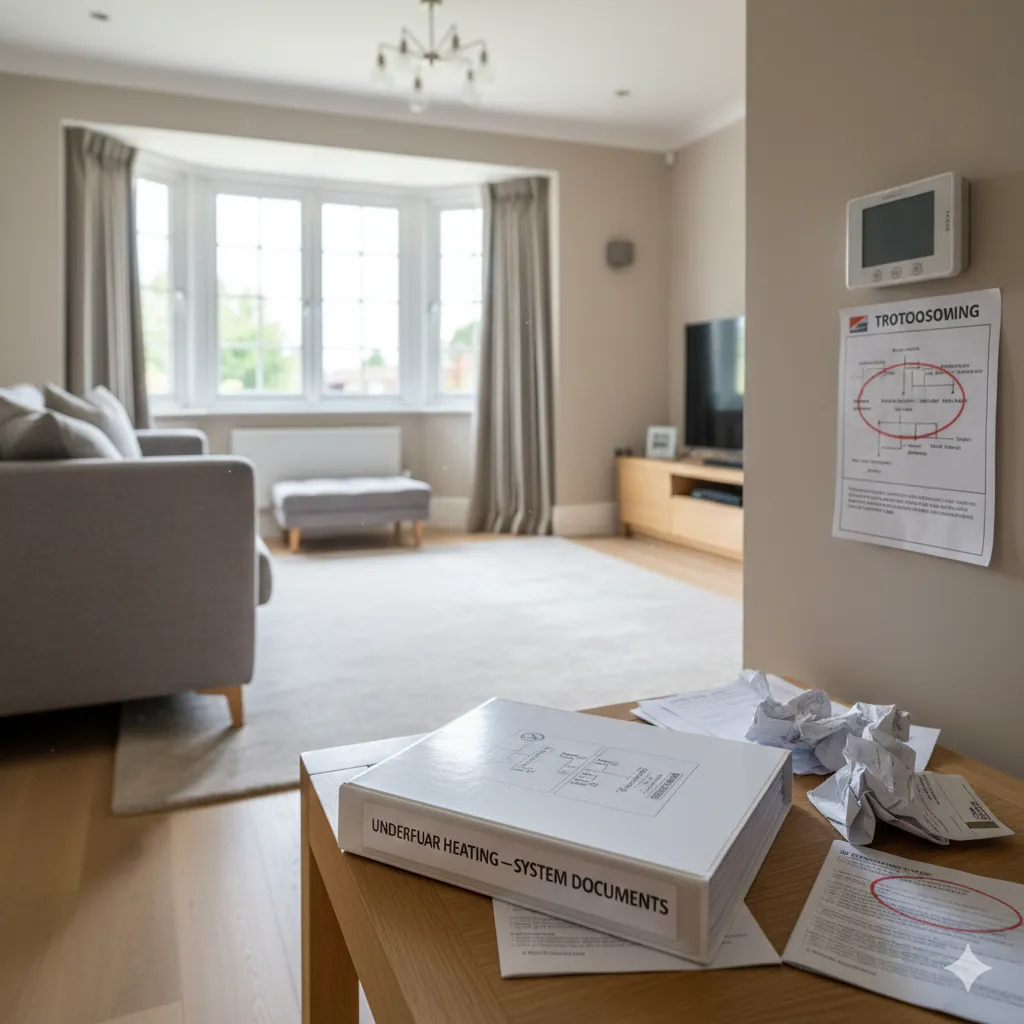
Heating Didn’t Work — Everyone Blamed Everyone
“Everyone Blamed Everyone When It Didn’t Work”
How unclear responsibility leaves homeowners stuck in the middle — and how good projects avoid it
Introduction — this is where projects turn stressful
This is one of the most difficult conversations any homeowner can find themselves in.
The heating isn’t working as expected.
Nothing is obviously broken.
And everyone involved has a different explanation.
“The installer says it’s the design.”
“The supplier says it’s the installation.”
“The manufacturer says it’s the controls.”
Meanwhile, the person living in the house is left in the middle — cold, frustrated, and unsure who to trust.
Why blame appears when systems don’t perform
Blame doesn’t usually come from bad intent.
It comes from fragmentation.
On many projects:
One party designs
Another supplies
Another installs
Another commissions (or doesn’t)
Each part may be done competently — but when performance doesn’t match expectation, responsibility becomes unclear.
That’s when conversations turn defensive instead of constructive.
The hidden problem: no one owns the outcome
Most contracts and scopes are written around tasks:
Supply equipment
Install pipework
Connect controls
Very few are written around outcomes:
Even comfort
Predictable behaviour
Efficiency in real use
So when something doesn’t feel right, the system might be “complete” — but the outcome hasn’t been owned by anyone.
Where this usually shows up
From real-world complaints and project reviews, the same scenarios repeat:
1. “It was installed exactly as specified”
The installer may be right.
But if the design didn’t fully account for:
Heat losses
Floor build-ups
How the home would actually be lived in
Then installation alone can’t fix performance.
2. “The design assumed ideal conditions”
Designs can be technically sound — on paper.
But if:
Insulation levels changed
Glazing increased
Layouts were adjusted
And the system wasn’t reviewed as those changes happened, performance can drift.
3. “The system was handed over, not explained”
This is where commissioning and responsibility overlap.
If nobody clearly explains:
How the system should behave
What’s normal and what isn’t
Who to contact for fine-tuning
Then small issues escalate into mistrust.
Why underfloor heating and heat pumps make this more visible
Low-temperature systems are honest.
They don’t hide mistakes behind high heat output.
Underfloor heating and heat pumps — especially when designed by specialists like Nu-Heat — rely on:
Accurate design
Correct installation
Proper commissioning
If any link in that chain is weak, performance suffers — and responsibility becomes blurred.
That’s not a flaw.
It’s how engineered systems work.
How good projects avoid the blame game
Well-run projects don’t wait for something to go wrong before deciding who’s responsible.
They do three things early:
1. One party owns system performance
Not just installation.
Not just design.
Performance.
That means:
Reviewing changes as the project evolves
Making sure installation reflects design intent
Ensuring commissioning is completed and understood
2. Design, supply and installation are aligned
Instead of being treated as separate silos, these stages are connected.
When:
Designers talk to installers
Installers understand the design logic
Suppliers support commissioning
Problems are resolved — not defended.
3. The homeowner knows who to call
This sounds simple, but it matters.
When homeowners know:
Who understands the whole system
Who can coordinate support if needed
Stress drops immediately.
Uncertainty is often worse than the issue itself.
How Sable prevents clients being caught in the middle
Sable’s role isn’t just to “do the work”.
It’s to:
Understand the design intent
Install systems in line with that intent
Commission them properly
Stay accountable for how they perform in real life
Working with specialist manufacturers and clear processes means issues are solved collaboratively — not passed around.
The goal is simple:
If something doesn’t feel right, the client knows exactly who is responsible for fixing it.

The real cost of unclear responsibility
When responsibility isn’t clear:
Issues take longer to resolve
Trust erodes
Small adjustments turn into major frustrations
When it is clear:
Problems are addressed quickly
Conversations stay calm
The system improves over time
That difference is felt long after the builders have left.
The quiet takeaway
Most heating disputes aren’t caused by bad systems or bad people.
They’re caused by gaps.
Gaps between:
Design and reality
Installation and commissioning
Responsibility and ownership
Close those gaps early, and the blame game never starts.
Next step — choose accountability over confusion
If your system isn’t performing and you feel stuck between parties, the first step isn’t arguing.
It’s clarity.
Book a system review with Sable Projects to assess:
Design intent
Installation quality
Commissioning and controls
Often, once responsibility is clearly owned, solutions follow quickly.

