We Thought Heating Could Wait | Real Renovation Mistakes
“We Thought the Heating Could Be Decided Later”
Why leaving heating decisions too late causes delays, compromises design, and drives unnecessary costs on site

Introduction – This sounds familiar for a reason
This comes up again and again — on Reddit, in renovation forums, in Google reviews, and in real conversations on site.
“We thought we’d decide the heating later.”
“We didn’t realise it affected so much.”
“No one told us it needed to be planned this early.”
It’s not carelessness.
It’s how most projects are framed.
Heating is often seen as something you slot in, not something you design around. But on real renovation and build projects, heating decisions quietly influence floor heights, layouts, timelines, budgets, and long-term comfort.
By the time the issue shows itself, changing course is expensive — or impossible.
The real issue: heating touches everything (even when you don’t see it)
On paper, heating looks simple:
Choose a boiler or heat pump
Pick radiators or underfloor heating
Install and move on
In reality, heating decisions affect:
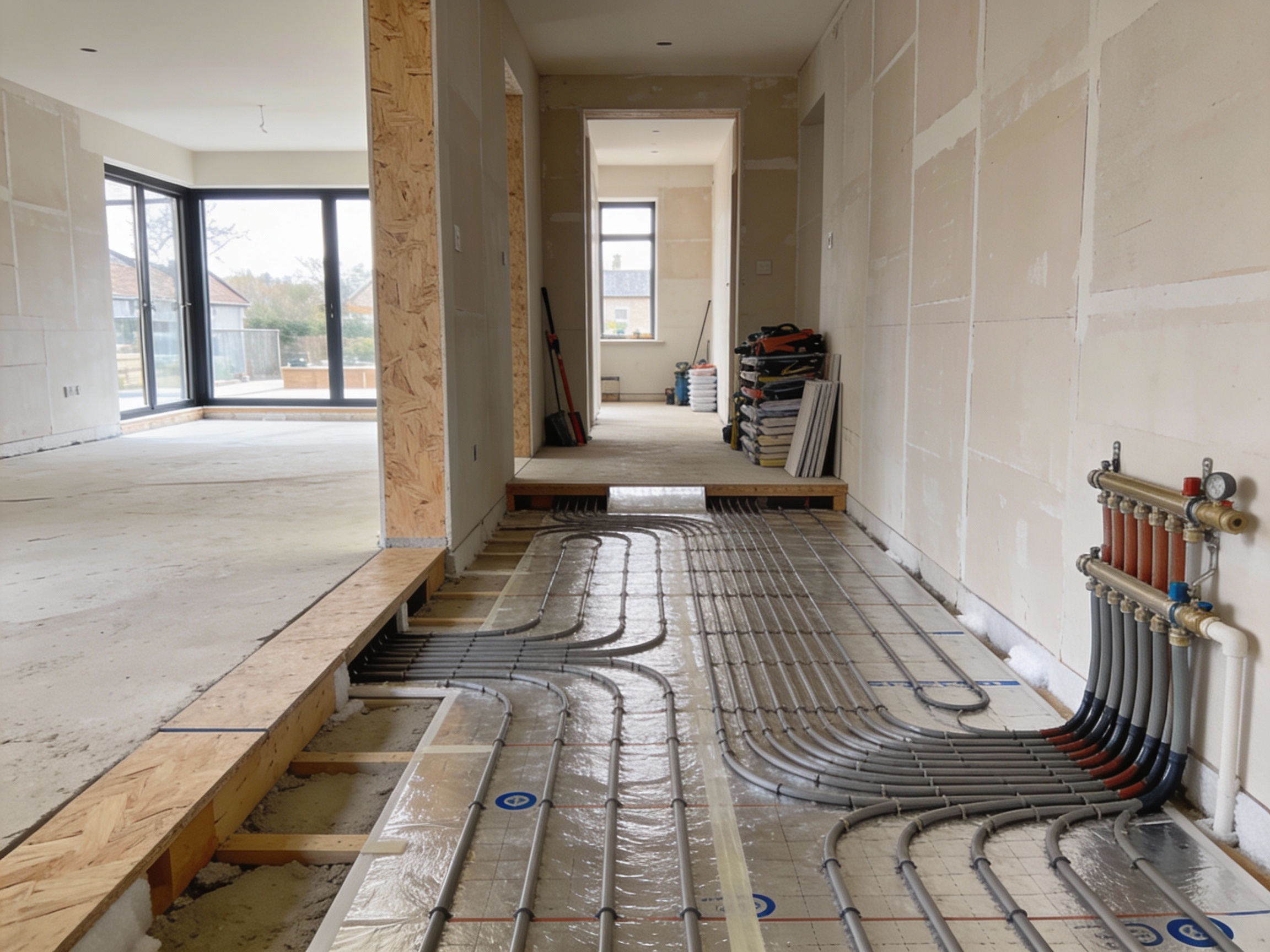
Floor build-ups and finished floor heights
Door thresholds, stairs and kitchen units
Control strategies and zoning
Whether a heat pump will actually perform as expected
This is why so many forum posts read like this:
“We’re mid-renovation and just realised the heating doesn’t work with the floor heights.”
By the time floors are poured or layouts are fixed, the window for good decisions has already closed.
What goes wrong when heating is left “until later”
Pulled straight from real-world renovation complaints, the same patterns repeat:
1. Floor heights don’t add up
Underfloor heating systems — especially warm water systems — require space. If floor build-ups aren’t accounted for early, you end up with:
Awkward steps between rooms
Doors that no longer line up
Kitchens that need redesigning
None of this is a heating fault.
It’s a sequencing issue.
2. Heat sources and emitters don’t match
Heat pumps are designed to run at low temperatures. Radiators often aren’t.
When heating is bolted on late:
Boilers or heat pumps are selected first
Emitters are chosen later
The system runs hotter than intended
The result?
Higher running costs
Lower efficiency
A system that technically works, but never feels right
3. Trades clash instead of coordinating
When heating isn’t part of the early design conversation:
Floor layers, screeders, electricians and kitchen fitters work in isolation
UFH layouts conflict with fixings or services
Delays stack up
This is where builders and homeowners get frustrated — not because anyone is incompetent, but because no one was tasked with seeing the whole system.
Why this keeps happening (and why it’s not your fault)
Most homeowners aren’t heating engineers.
Most architects aren’t mechanical designers.
Most builders are expected to “make it work” on site.
Forums are full of comments like:
“I assumed someone would flag this earlier.”
The truth is: unless someone owns the heating strategy, it falls between disciplines.
That’s the gap Sable exists to close.
How Sable prevents this problem before it appears
Sable’s role isn’t to sell a system — it’s to sequence decisions correctly.
That starts by asking the right questions early:
Are floors being replaced or retained?
How much height tolerance do we really have?
Is the project heat-pump-ready now, or later?
Where do manifolds, controls and plant actually live?
Only once those answers are clear does system choice make sense.
This is why Sable works with properly designed underfloor heating systems — including specialist manufacturers like Nu-Heat — where room-by-room heat loss calculations and system design happen before materials hit site.
What changes when heating is planned early
When heating decisions are made at the right stage:
Floor build-ups align cleanly with design intent
Kitchens, stairs and thresholds land properly
Boilers and heat pumps operate in their efficiency sweet spot
Trades sequence around the system instead of fighting it
Most importantly, the heating disappears into the background — which is exactly what it should do.
A simple rule for renovation projects
If your project includes:
Underfloor heating
A heat pump
Changes to floor levels
Open-plan layouts
Then heating is not a late-stage decision.
It’s a design input.
Next step: sanity-check your project timing
If you’re early in planning — or even mid-renovation — this is the right moment to pause and review where heating fits into the sequence.
Book a heating strategy call with Sable Projects
A practical conversation to:
Sense-check timing
Identify risks early
Avoid expensive design compromises later
No jargon. No pressure. Just clarity.

